A mouth ulcer that won’t heal: when to see a doctor
Most mouth ulcers heal within two weeks. One that doesn’t, especially if you use tobacco, needs to be examined. Here is what to look for.
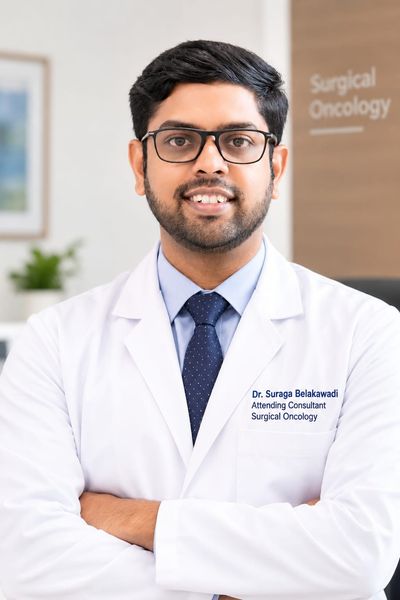
MBBS, DNB (General Surgery), MCh (Surgical Oncology), FMASO
Fellowship in Robotic & Laparoscopic Surgical Oncology
Gold medal, MCh Surgical Oncology
Robotic & Laparoscopic Surgical Oncologist
Attending Consultant, KIMS RENOVA Oncology Institute, Mahadevpura, Bengaluru
I treat cancers of the digestive system, breast, female reproductive organs, head and neck (including the thyroid), skin and soft tissues. Where it is the right choice for you, I use robotic or keyhole surgery, which means smaller cuts and usually a quicker return to normal life.
Each page explains the condition in plain language: warning signs, tests, treatment options and what recovery looks like.

Dr. Suraga believes good cancer care starts with listening. He takes time to explain each option clearly, involves families in decisions, and plans every treatment around the person, not only the disease.
Through @onco_outreach on Instagram, he shares short, practical videos on spotting cancer early and understanding treatment.
Plain-language articles on warning signs, tests and recovery.
Most mouth ulcers heal within two weeks. One that doesn’t, especially if you use tobacco, needs to be examined. Here is what to look for.
Bleeding from the back passage is often blamed on piles. Usually that is right, but bowel cancer can cause the same symptom. Here is when to get it checked.
Share the case on WhatsApp or call directly. Dr. Suraga is glad to discuss whether robotic or minimally invasive surgery suits your patient.

Please bring any scans, biopsy reports and previous treatment records to your first visit.